
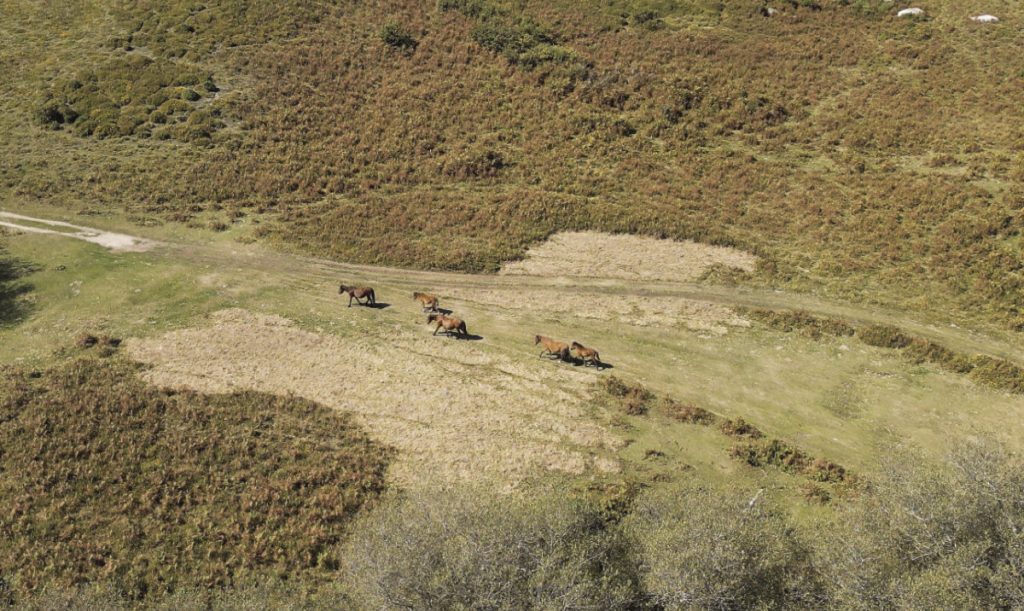
Despite not being considered completely wild, Garranos mostly live in a natural environment and in freedom, recreating behavior patterns similar to their wild ancestors.
Group Structure
Group Size: Variable between 10 and 50 individuals, with an average of 20 mares per group.
Leadership and Defense: The group is led by an older female, who leads the group’s actions, and defended by a stallion that delimits the territory.
Dynamics of Young Males
Dispersal: As a rule, at two years of age, young males are forced to leave the group.
Bachelor Group: These dispersed males can form small groups, known as a “bachelor group”, usually made up of 2 to 3 individuals, but can be larger.
Hierarchy and Roles in the Group
Dominant Females: Females are generally the most dominant members, with the leader, typically an older female, defining all of the group’s actions.
Function of the Male: The stallion, which spends a lot of time outside the herd in search of females or defending the group, essentially has reproductive and defense functions against intruders, such as other stallions or wolves.
Hierarchical Relationships: The mares remain close, establishing strong hierarchical relationships among themselves, following the leadership of the dominant female in a hierarchical manner.
